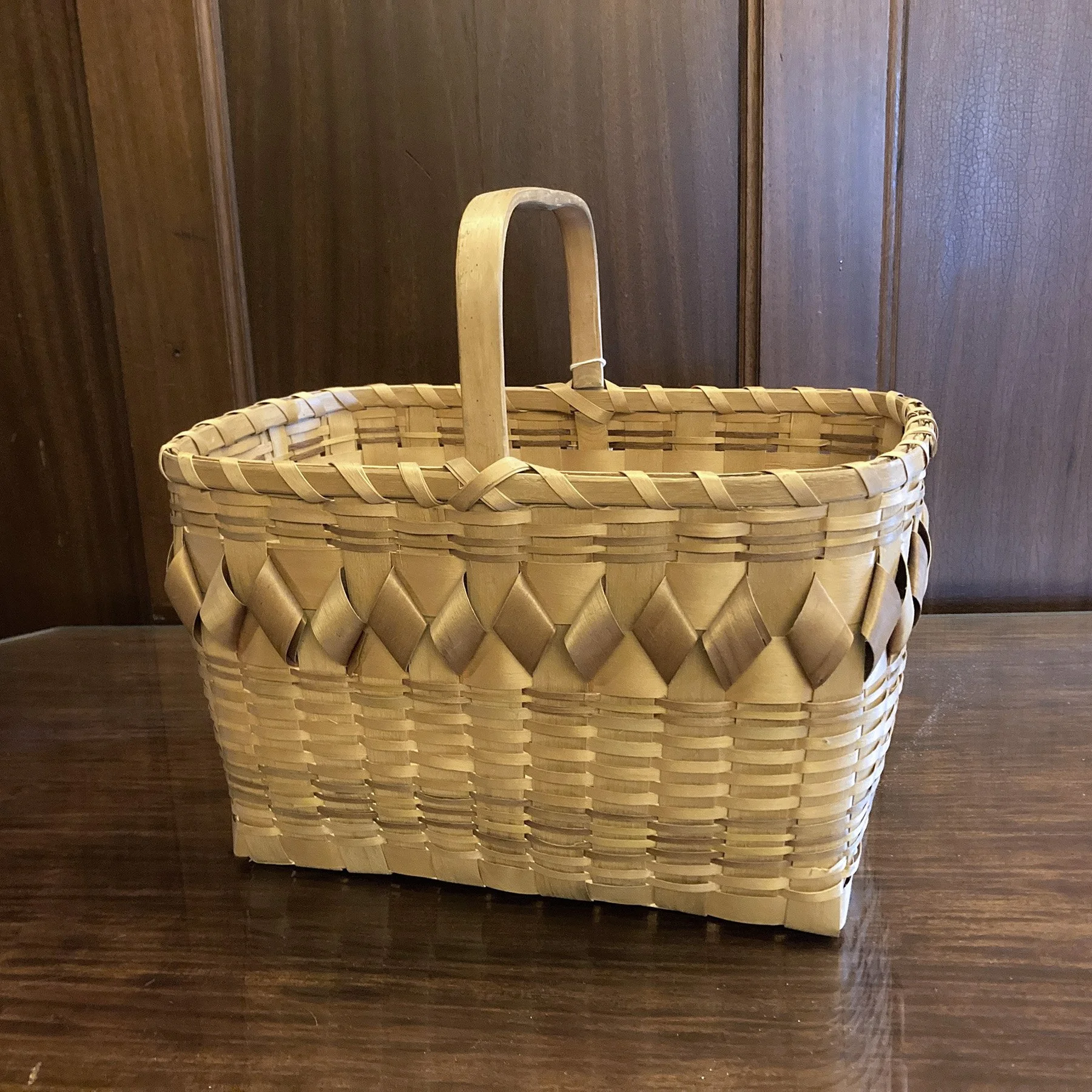
Birch Bark Basket
MCHS has been collecting objects of historical interest since the 1950s (and also inherited collections before this point). And not all objects have a clear provenance to tell us where they came from and what they are. One ongoing project our curators are always working on is processing the odd things that we come across, which were never properly added to the collections. Often with these “found in collection” items, we might not know who the original donor was. And even when we know who donated an object, often they don’t know the story
In this case, the uncertainty in the object’s origin is even more complicated, because it is almost certainly originally created from Native Americans. Our limited records include a brief note that it may have been Ojibwe in origin, but a visiting expert suggested that it would be more in line with Ho-Chunk crafting.
The Complicated Story of “Indian Artifacts”
For most Americans, the story of the peoples native to this area is one of past occupancy. They were here, but after treaties were signed, their traditional lands were taken by the Americans who came to lumber and farm. In this way, Indian history is relegated to something that played out before the establishment of modern towns and cities.
In reality, the treaties with tribal nations did not lead to the removal of Indian presence in Marathon County, far from it. There were
The Complicated Story of “Indian Artifacts”
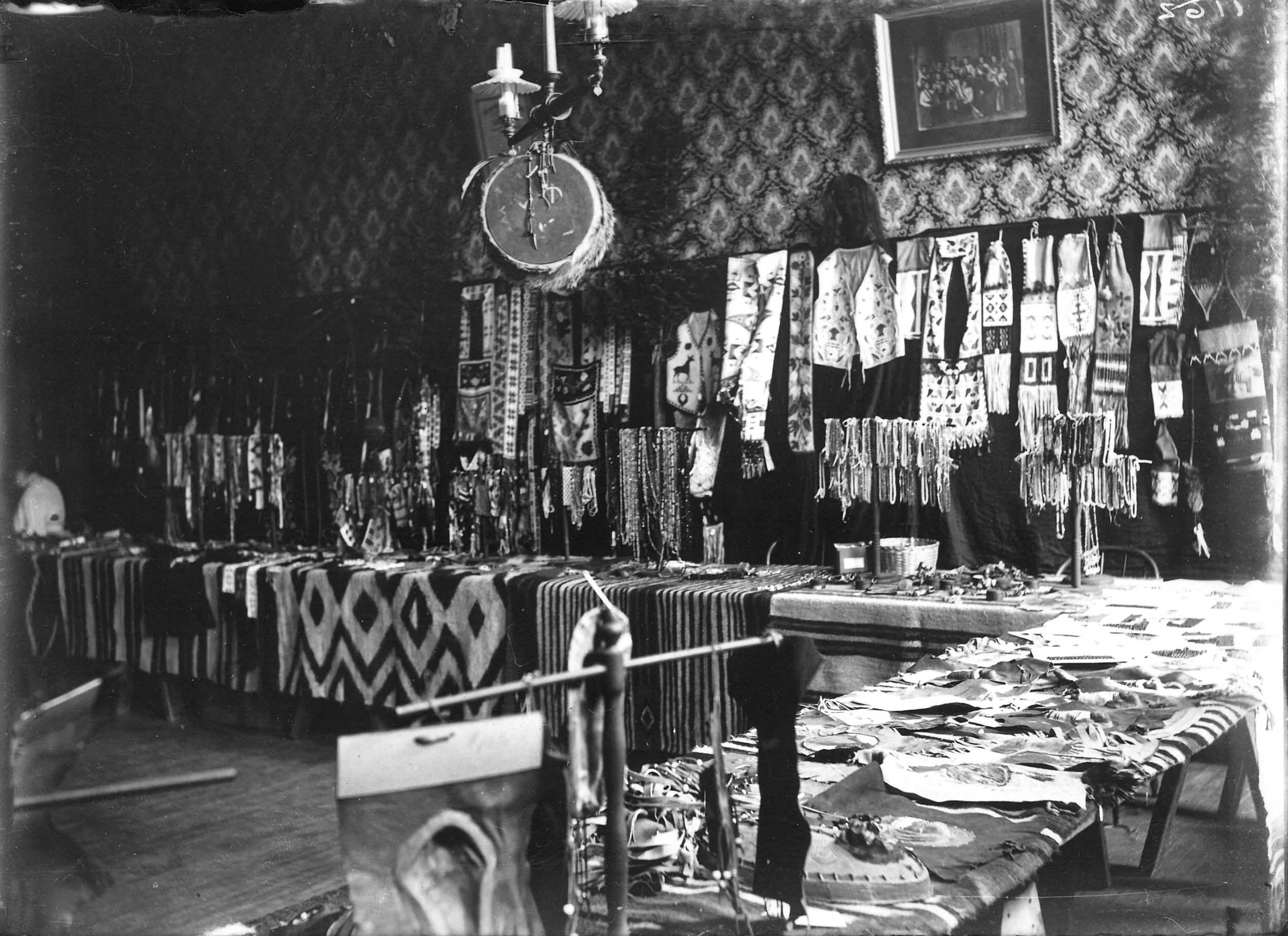
One of the more colorful residents of Marathon County in the 1930s, was that of Hugo Munn. He was well respected for his ability as a decorator and interior designer, for example he regularly traveled to state conventions to help build and design displays. But he also supposedly said to be the foremost expert in the state on native crafts. He had spent years amassing a what was considered the largest collection of Indian artifacts in Wisconsin. Contemporary sources said of him that he had become so knowledgeable about the various artistic pieces, that he had even taught some natives the crafts that they themselves had lost over time.
Having spent much of his life among native groups, Munn was also an advocate for their well being. For example he publicly disagreed with P.E. Everest, the government agent overseeing the LaPointe Reservation near Ashland. Everest represented the paternalistic philosophy that sought to provide aid to Native Americans by sending their children to schools, providing business education, and insisting they adopt farming. Munn spoke up to agree that the plight of natives on the reservation was far from ideal, but disagreed with Everest, “in the matter of making farmers out of most of the Indians. They should have the privilege of choosing the job or profession they like best.”
Over the 1930s, Munn went further