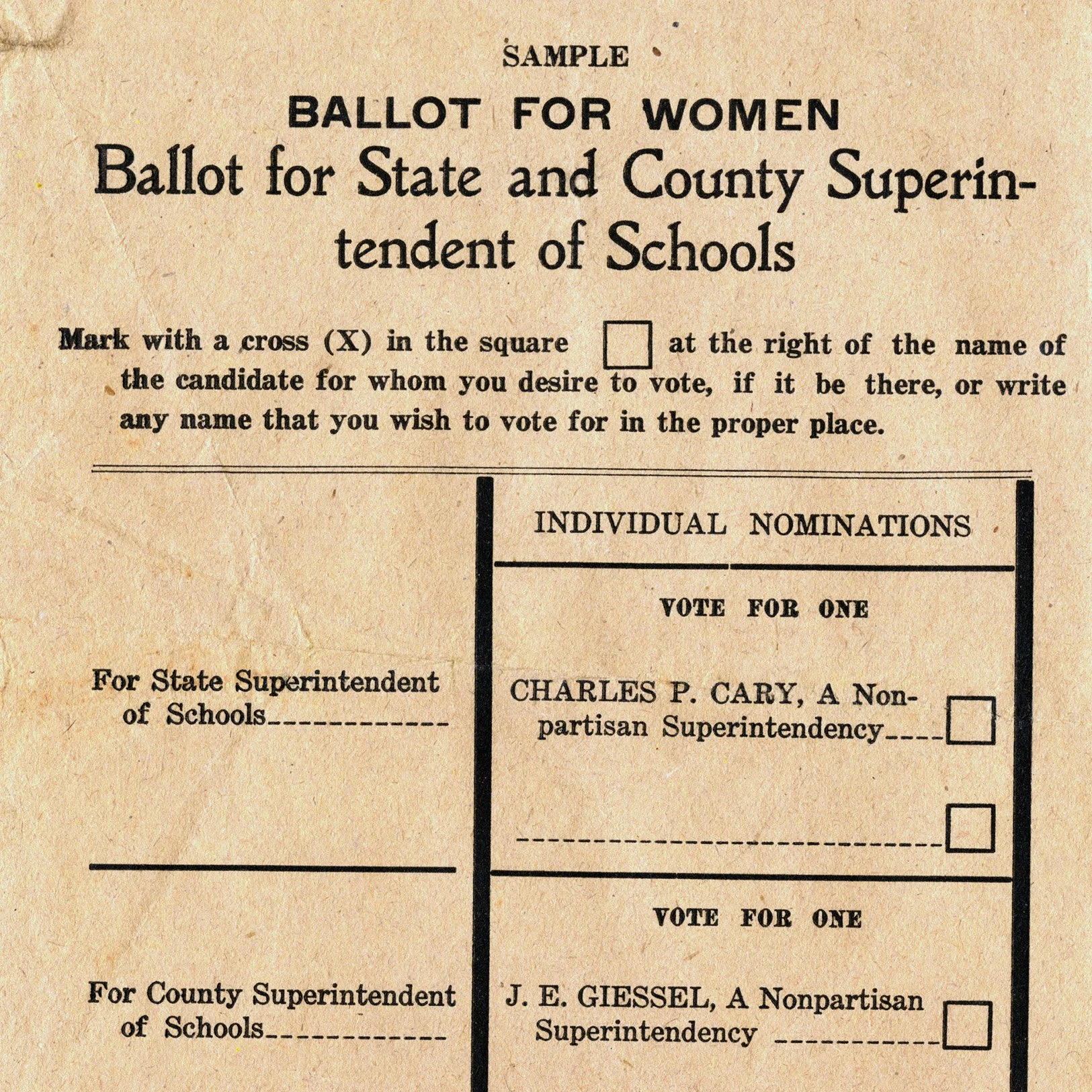
A Sample Ballot for Women, c 1917
Wisconsin women were not given Full Suffrage (the right to vote) until 1920 and the passage of the 19th Amendment to the US Constitution. But women did win Partial Suffrage to vote back in 1882, which allowed them to vote in issues of school matters. And this was thanks in part to the Schofield Suffragists like Almedia B. Gray.
Getting Started
In 1879, Susan B. Anthony came to Wausau and gave her famous “Women Want Bread” speech to a large crowd that gathered at Kolter’s Music Hall. The newspapers and later histories noted that she was applauded for her passion and command of the issues, but most of the attendees were unconvinced and were certainly not spurred to action. This was actually not the case, because the week following Anthony’s speech, a chapter of the Women’s Christian Temperance Union was formed in Wausau. And by 1881, a chapter of the Wisconsin Women’s Suffrage Association was established in Schofield, Wisconsin, with further groups then organized in Wausau, Mosinee, and Wisconsin Rapids.
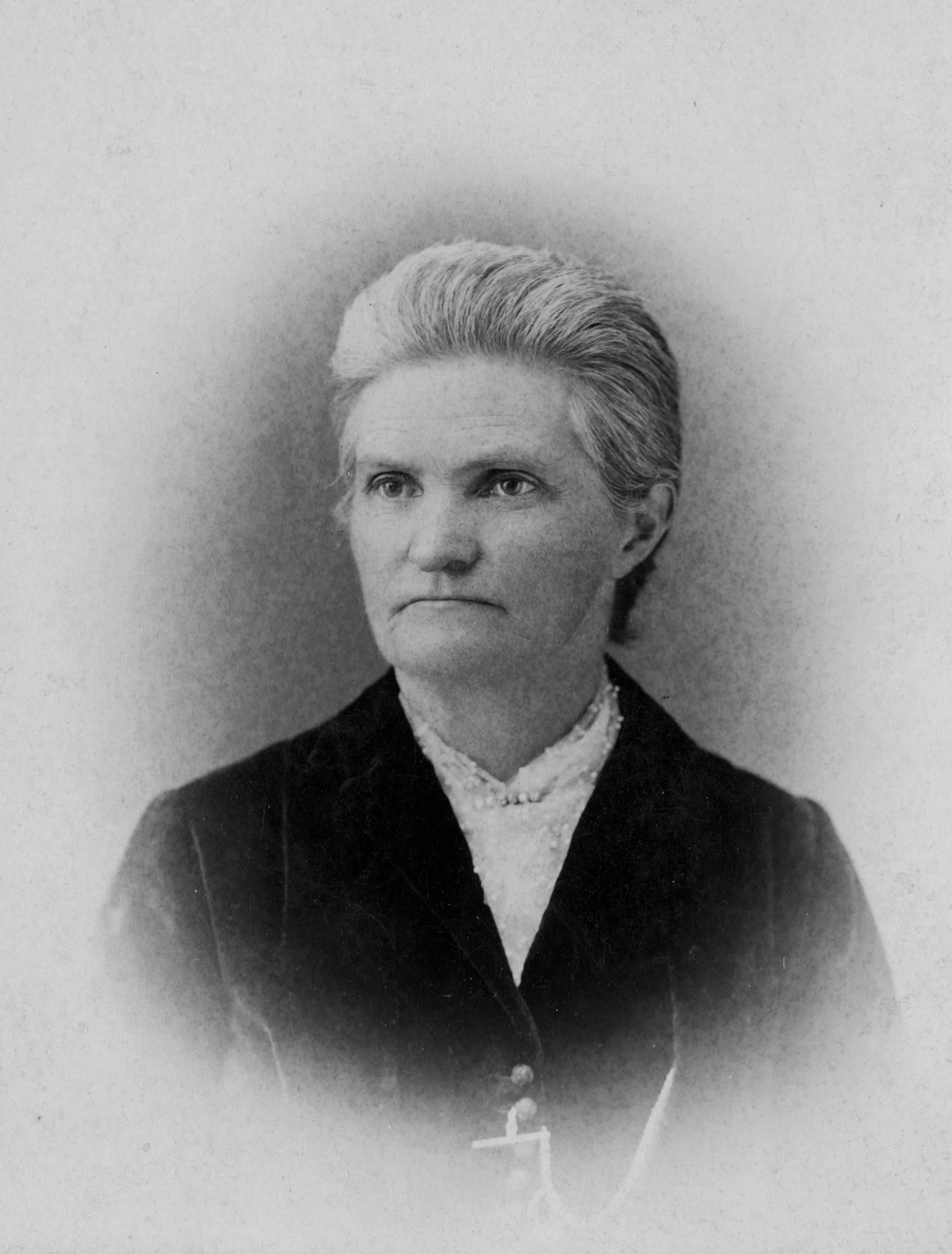
Almedia B. Gray: the Schofield Suffragist
Although people took up the cause of Suffrage across the region, probably the most important suffragist of the time was Almedia B. Gray of Schofield. In the 1840s, her family moved to Marathon County, where her father, Captain Simon Lombard, became the business partner of William Scholfield in running a sawmill on the Eau Claire River. This made Almedia one of the very first residents of what would become Schofield, She married John Gray, a young lumberjack from Canada who would soon become a very successful lumber mill owner in his own right. And by the end of the 1870s, the Grays and their family were an important part of the community around the Schofield mill. From this community would come a number of important women for the cause of suffrage.
Mrs. A.B. Gray became the chair for the reorganization committee of the Wisconsin Women’s Suffrage Association in 1881, and would join serve as the treasurer for the state organization in the following years.
Achieving (Partial) Suffrage
The WWSA adopted a new tactic in the early 1880s they hoped would find more success. Instead of trying to convince a majority of Wisconsin voters (all men) to give women the right to vote, they realized they just needed to convince a majority of the legislators of their cause. They crafted a bill that would give Wisconsin women suffrage, and after their allies in the state senate made some changes to ensure its passage, it did indeed pass. But the bill had been changed from full suffrage to suffrage “in school matters.” This was seen as less objectionable, because people would have seen the education of children as part of the responsibilities of women’s “separate sphere.”
But the WWSA was assured that there was a path to expand their newly won suffrage from just school board elections and school superintendents, to nearly complete, full suffrage. Over 1883-84, the WWSA sued the city of Racine over the refusal to issue a ballot to Reverend Olympia Brown, and successfully argued that she had been denied her lawful right to vote. The reason for this refusal was that the ballot would have included races that were not considered “school matters,” but no guidance was given the poll workers on how to give part of a ballot to Rev. Brown. On the other hand, the WWSA argued that the vagueness of “school matters” meant that she should have legally been allowed to vote for positions beyond school boards. City councils and village boards decided the boundaries of school districts. Clerks and treasurers had significant input on funding and reporting about school activities. Mayors and even governors could have a huge impact on policy. And the courts agreed with the WWSA.
Until 1884, when the Wisconsin Supreme Court weighed in. They threw out earlier rulings in favor of the suffragists. If the law had been intended to give women more extensive suffrage, than it would not have needed “in school matters.” And so until the state officials figured out how make changes that would ensure clarity for the process, women were effectively dis-enfranchised in Wisconsin once again.
Over the next 20 years, the optimism among Wisconsin’s suffragists was not strong. Schofield’s Almedia Gray decided to leave Wisconsin altogether in 1896. She and her husband John relocated to Los Angeles, CA, where the cause of equal suffrage remained hopeful. And Almedia was a vocal advocate, eventually resulting in California giving women full suffrage in 191X. And Mrs. Gray not only cast ballots in California, she also lived long enough to see Wisconsin women also achieve full suffrage, with the ratification of the 19th Amendment to the US Constitution in 1919.
Ballots for Wisconsin Women
Despite the setbacks of the mid 1880s, Wisconsin women were not idle. A new generation of suffragists took up the cause into the 20th century. And one of the first steps towards equal suffrage was remembering that there was a law on the books that meant women had partial suffrage, and after 20 years steps were taken to finally address the reason for stopping women voting.
For 15 years, between 1905 and 1920, women in Wisconsin would once again be able to vote, although not for all positions and issues. Special ballots for women were produced with only approved races. And while this was far from full, equal suffrage for women, it was a step in the right direction that undoubtedly helped normalize women at the ballot box in Wisconsin.
We don’t have any actual ballots in our collections, there tend to be rules mandating who can own ballots. But this sample ballot showed what women looking to vote in 191X would expect to see when they turned up at the polls.
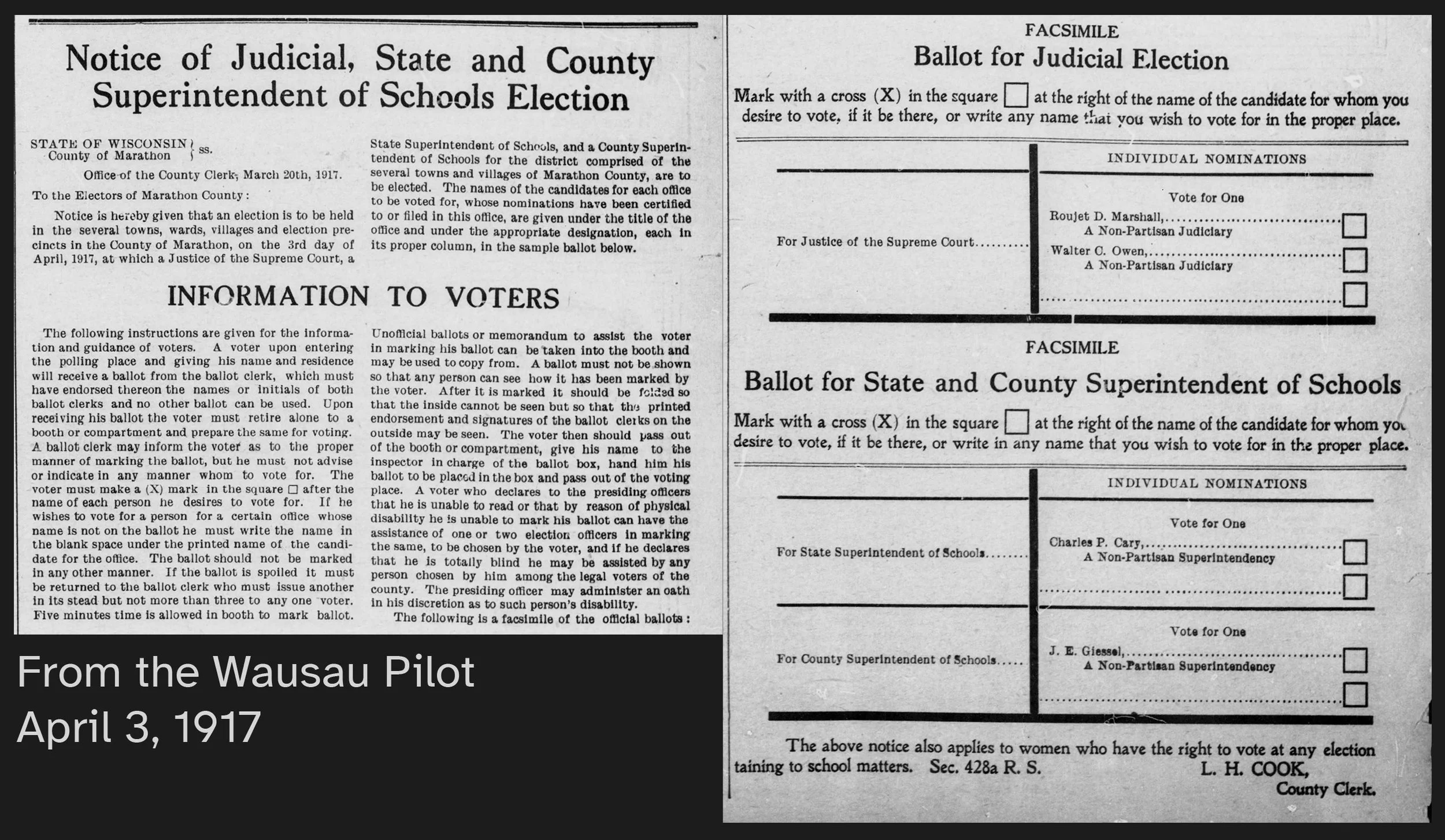
The 1917 Sample Ballot
The specific sample ballot for women from our collections was for a spring election in 1917. In addition to the races for state and county Superintendants of Schools (in which women were able to vote), there was also an election for a Justice of the (Wisconsin) Supreme Court (in which women were unable to vote).
“Facsimile” ballots like this were often published in local newspapers in advance of elections, so that voters could be prepared when going to the polls. L.H. Cook appears to have been the first county clerk to clearly call out that women could vote in part of the election (at the bottom of the column). But since women were given back the right to vote in school elections starting in the 1905 elections, the voter information would often include two sets of pronouns to refer to voters (i.e his or her ballot").